This is a real story. In 1969 (almost 60 years ago), America decided they would send a big spaceship into space. They wanted to land a small lunar module on the moon and put a human being there—and then bring them back safely.
Until that time, human beings had only gone to space in rockets, taken a big circle around the Earth, and come back. When you go outside the Earth into space, there is no gravity, so you float around in your spaceship. You can't go outside because there is no oxygen—you would die. So you have to wear a special suit that gives you oxygen, and you must stay inside your spaceship.
A big rocket has a spaceship (called a module) on top where the astronauts sit. The rocket launches, goes up, and then falls back down. The module slowly drifts and moves toward space.
It is very difficult to build this technology—the rocket, the module, and all the equipment. This is all done by a company called NASA. They are in the United States, and they send all the spaceships, rockets, and people into space.
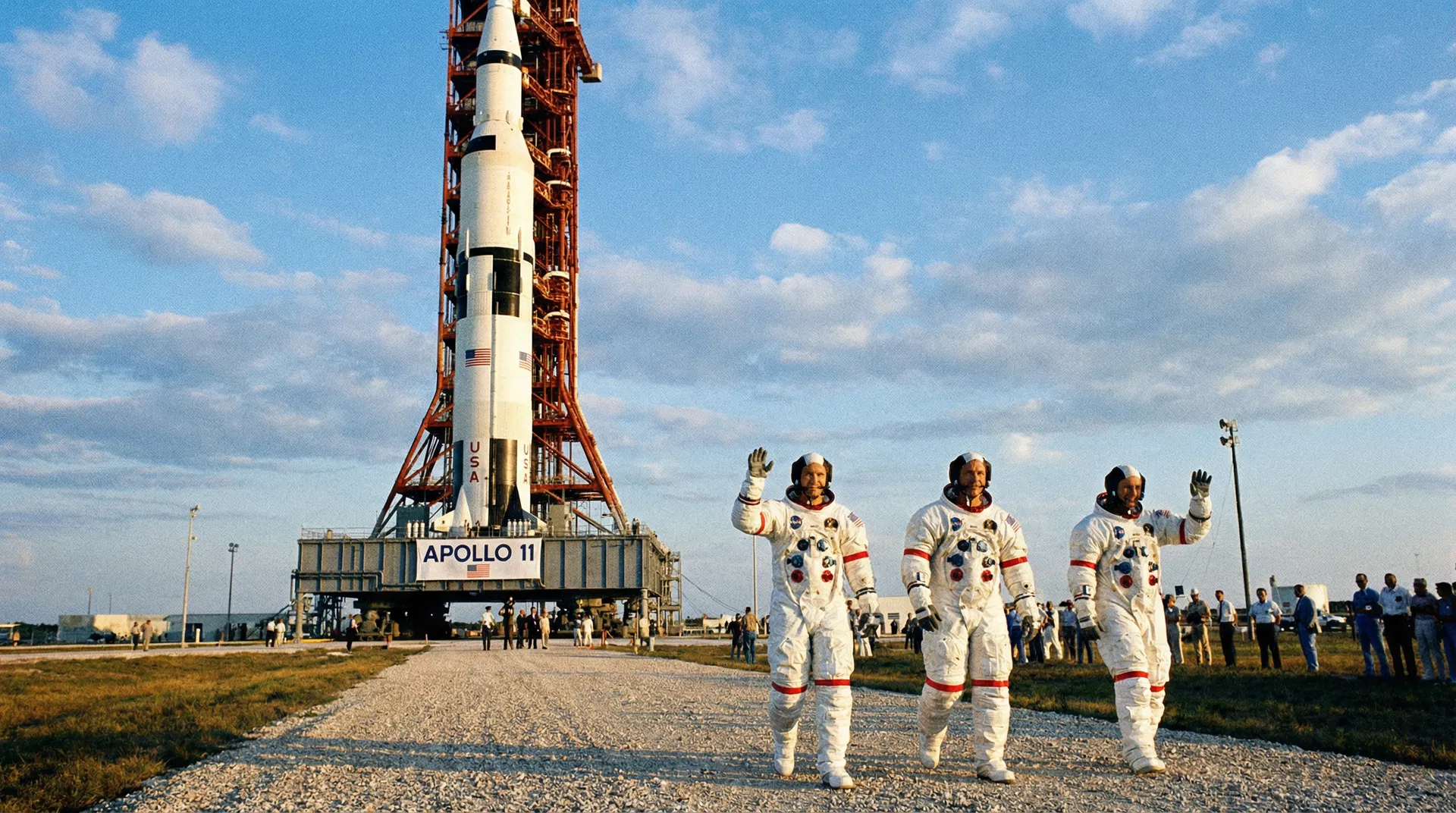
NASA said, "We are going to send three people to the moon." So they chose six of the best pilots in America and trained them very hard.
When the rocket goes up, it goes so fast that it can make people dizzy. So the astronauts have to practice, practice, practice, practice. They put them in something like a roller coaster and make them spin round and round and round very fast until they get very dizzy. That is the type of training they do.
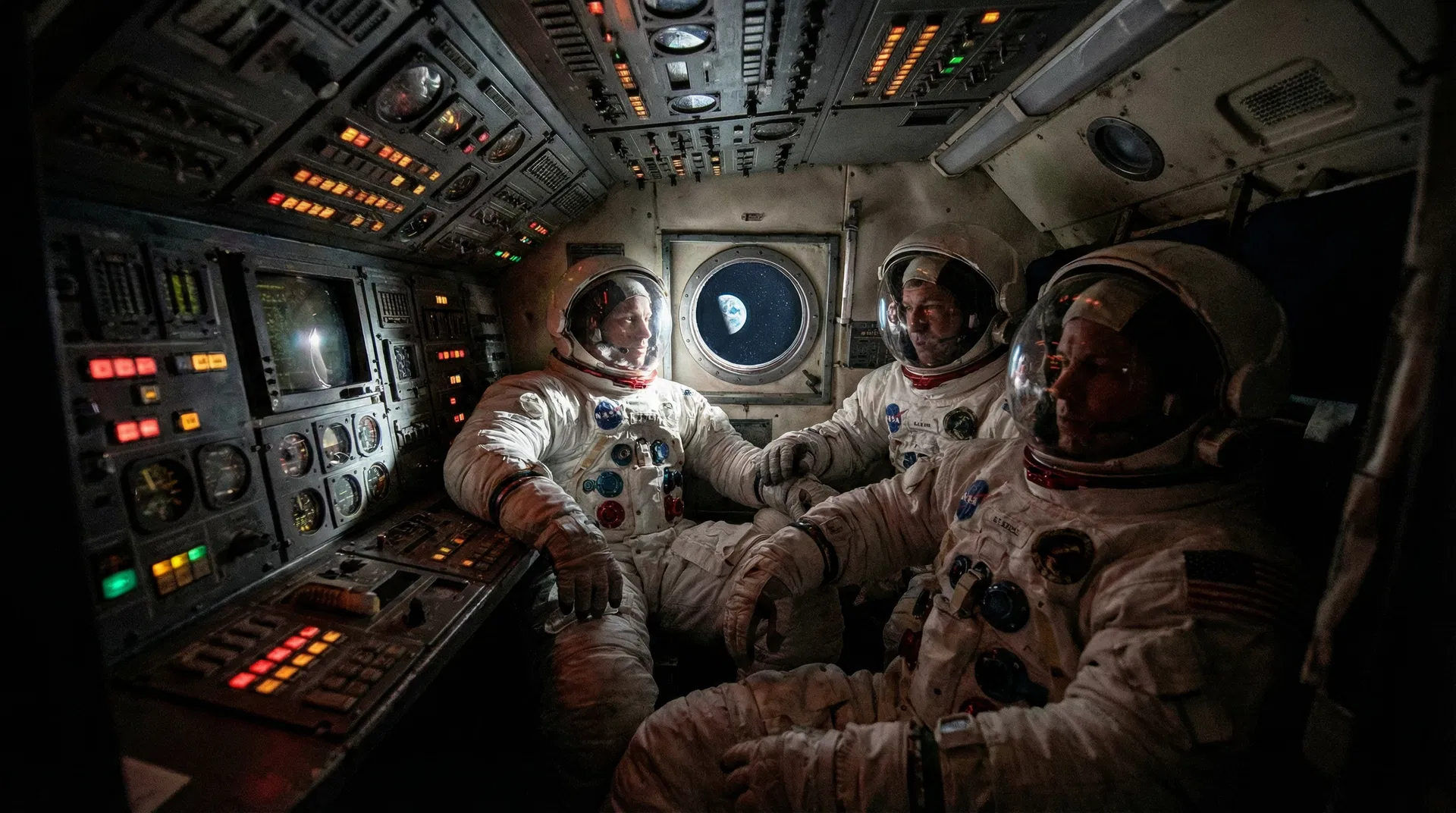
And the spaceship is very small—about the size of a bed. Everything you have to do is in this tiny room. You are stuck in a room this size for months and months together.
NASA chose three people to go to the moon: **Neil Armstrong**, **Buzz Aldrin**, and **Mike Collins**.
First, they all went into the lunar module. The rocket took them out into space. The rocket fell away, and the module slowly started to fly toward the moon.
The moon is very far. It takes about four weeks to travel there, and the spaceship goes very fast. The moon is also moving all the time—it goes around the Earth. So NASA had to calculate exactly how fast the moon was moving and time everything perfectly.
The lunar spacecraft flew and flew. When it reached the moon, it started going around it. Then, from the main spaceship, a smaller lunar module came out and went down toward the moon's surface.
One person—Mike Collins—stayed in the main spacecraft, circling the moon, keeping everything ready.
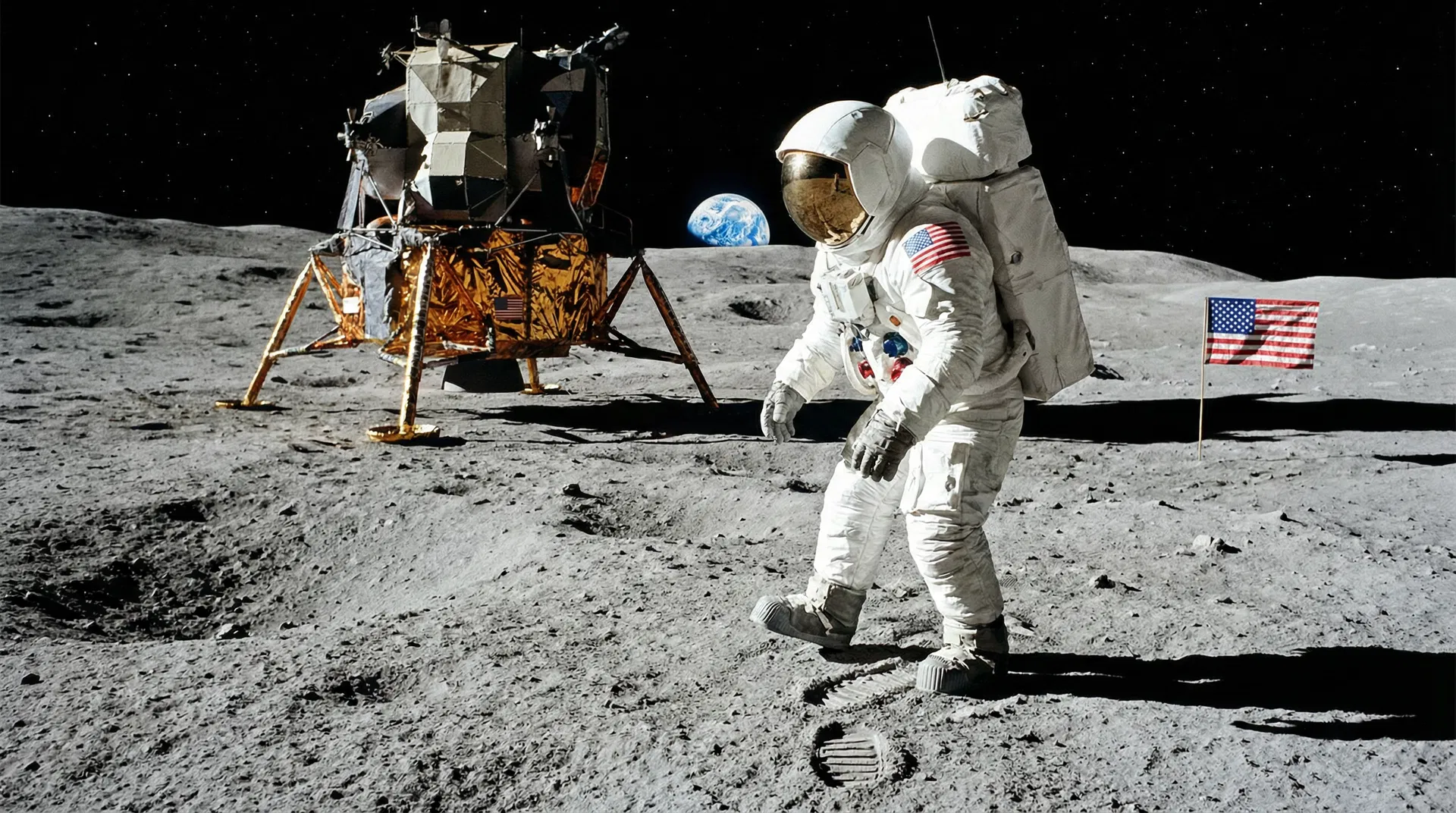
The smaller lunar module landed on the moon.
The first person who came out of the lunar module was **Neil Armstrong**. He became the first human being to set foot on the moon.
He stepped onto the moon, and then immediately after that, **Buzz Aldrin** stepped out.
But you know, if you ever ask in any book, "Who was the first person to land on the moon?" they always say **Neil Armstrong**. Neil Armstrong only stepped on the moon one second before Buzz Aldrin, but nobody remembers Buzz Aldrin.
And even worse is **Mike Collins**, the person who stayed in the spacecraft outside, circling the moon. He never actually got down and walked on the moon. He did all the training, but he stayed there, keeping the spacecraft ready.
Once Neil Armstrong and Buzz Aldrin walked around the moon and planted the flag of America, they came back into the lunar module. It flew up and connected again with the main spacecraft. Then they slowly traveled back to Earth and came down.
That's how they sent the first human beings to the moon in 1969. It was an amazing achievement!
**The lesson:** Sometimes, being first is remembered forever—even if it's only by one second. And sometimes, the people who do the most important work (like Mike Collins, who kept the spacecraft ready) are forgotten. But every person on the team was essential to making history.